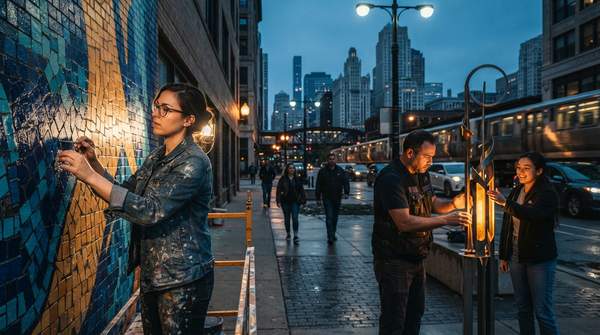
Chicago offers two fundamentally different routes to public art support, and choosing the wrong one can cost an applicant months. If you are an individual artist hoping to create work for the city, your pathway runs through the Department of Cultural Affairs and Special Events (DCASE), which commissions artists for Percent for Art projects. If you are part of a small arts or culture organization, your likelier route is a grant from A Road Together (ART), a Field Foundation initiative supported by the MacArthur Foundation that funds organizations with annual budgets up to $1 million.
Understanding Chicago's Public Art Funding Landscape
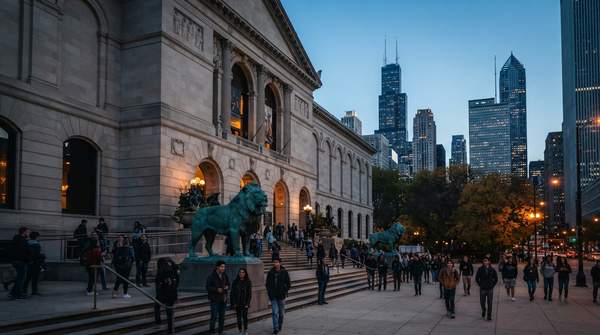
Chicago's public art scene is sustained by both public money and private philanthropy, and the two streams serve different purposes. The city side is the Chicago Public Art Program, run by DCASE, which implements the City's Percent-for-Art effort and manages other publicly funded permanent and temporary public art throughout the city, according to the program's own overview. It is the machinery behind works that have become city landmarks, from Cloud Gate in Millennium Park to Alison Saar's Monument to the Great Northern Migration.
The private side is newer. In 2023, the MacArthur Foundation established a regranting partnership with the Field Foundation to offer general operating support to small and mid-sized arts and cultural organizations in Chicago. That partnership, A Road Together (ART), is an initiative of the Field Foundation supported by MacArthur, and it reflects an explicit goal stated by MacArthur: a more equitable distribution of its Chicago Commitment resources across the city's geographies and populations, and greater diversity in the organizations it supports. The key distinction is mechanism—one path pays artists to make work, the other funds organizations to operate.
DCASE Percent for Art Program: City-Funded Commissions
The Percent for Art program is built around commissions, and it is designed to be, in the city's words, "both project-specific and community-based." Once an eligible project has been identified, program staff follow a defined selection process. The most important fork is budget: if the money available for a project is no more than $10,000—including the artist's fee, the cost of fabrication and the cost of installation—the city's guidelines state that the project will usually be awarded as a direct commission rather than through a competitive process. Larger projects instead go through Calls for Artists.
That community-based character is not decorative. For all projects, the program solicits community input through notification of the local alderman and public meetings, giving neighbors a formal voice in what gets installed where. For artists, this means a commission involves more than a proposal: it involves showing up to a public process where residents weigh in on the work.
Step-by-Step: Engaging with DCASE for Public Art Projects
For artists, engagement with DCASE follows a sequence with two entry points, and neither is an application for a specific project. The steps below are drawn from the official program guidelines.
- Join the Artist Email Registry. The Chicago Public Art Program maintains an Artist Email Registry to notify interested artists of public art opportunities, including Percent for Art projects and other open calls. This is the lowest barrier to entry and the way most artists first learn about projects.
- Consider the Prequalified List. The 2023/2024 Chicago Public Art Prequalified List is a juried pool of 58 professional artists, artist teams, and arts nonprofits based in Chicago. This list helps facilitate the selection of artists for public art and other special commission opportunities of the Department of Cultural Affairs and Special Events (DCASE) Chicago Public Art Program. Being on it positions an artist for the direct-commission track—the smaller projects the city awards without a competitive call.
- Respond to Calls for Artists. For larger projects, watch for the Calls for Artists announced through the registry and apply when a project fits your practice.
- Participate in community review. Once a project is underway, expect the alderman notification and public meeting process, where community input shapes the final selection.
One point of clarity: the Prequalified List is a pathway to direct commissions and selection opportunities, but it is not the only door. Artists who are not on the list can still pursue larger projects through open Calls for Artists, and anyone can join the email registry.
MacArthur/Field Foundation's 'A Road Together (ART)' Initiative: Private Grant Opportunities
ART is a different instrument entirely. It provides general operating support—not project commissions—to arts and culture organizations in Chicago with annual budgets up to $1 million. Using MacArthur funds, the Field Foundation supports organizations that align with its mission to center equal opportunity for all and achieve community empowerment.
The eligibility line matters here. An individual artist, however accomplished, is not the applicant unit; ART is aimed at organizations. MacArthur frames the initiative as part of its Culture, Equity, and the Arts work within the broader Chicago Commitment, and the intended beneficiaries are small and mid-sized organizations across the city's varied neighborhoods. For community groups that have organized themselves into a nonprofit or similar structure, this is the relevant stream.
Engagement is straightforward administratively. Interested organizations should view the ART funding guidelines and application information published through the Field Foundation, and the foundation is also the contact point for questions about the program. Because application windows and deadlines change, groups should check the Field Foundation's current guidelines rather than relying on secondhand summaries.
Decision Framework: City Commission vs. Foundation Grant
The comparison below distills the two pathways into the attributes that actually determine which one fits your situation.
| Attribute | DCASE Percent for Art Program | ART Initiative (Field Foundation, supported by MacArthur) |
|---|---|---|
| Funding source | City of Chicago, via DCASE | Field Foundation initiative supported by the MacArthur Foundation |
| Primary mechanism | Artist commissions for public art projects; direct commissions for projects of $10,000 or less, Calls for Artists for larger work | General operating support grants to organizations |
| Eligibility focus | Artists—including opportunities tied to the juried Prequalified List and open Calls for Artists | Arts and culture organizations in Chicago with annual budgets up to $1 million |
| How to engage | Join the Artist Email Registry; apply to the Prequalified List; respond to Calls for Artists; expect community input via alderman notification and public meetings | View ART funding guidelines and application information through the Field Foundation, which also fields questions |
The decision logic follows directly from the table. If you are an individual artist or artist team wanting to make work for public space, the city pathway is the one built for you; your first move is registry signup. If you are a community group with an organizational budget of $1 million or less seeking operating support to sustain arts and cultural work, the ART initiative is the fit, and the Field Foundation is your first contact.
Your Next Steps: Engaging with Chicago's Public Art Funding
Artists and community groups should first identify whether their project aligns with a city-funded commission through DCASE's Percent for Art program or a grant opportunity like the MacArthur/Field Foundation's ART initiative, then follow the specific engagement steps for the chosen pathway. This guide covers those two streams only, not every art grant in Chicago, and it does not address donating art to the city or how to craft a winning proposal.
The measurable starting point is concrete: successful registration on the DCASE Artist Email Registry or Prequalified List, or a successful inquiry or application submitted to the Field Foundation for ART grants. Those milestones can be checked directly—registration confirmed by DCASE, or a response received from the Field Foundation—and they are the evidence that your pathway choice has moved from plan to process.