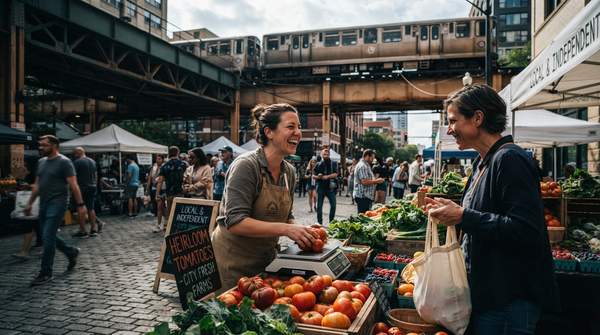
Most farmers' markets in Chicago are not run by the city. They are operated by independent enterprises — chambers of commerce, Special Service Areas, and non-profit organizations — while the city's Department of Cultural Affairs and Special Events (DCASE) oversees permitting and serves as a resource. That single fact shapes everything a shopper or an aspiring vendor needs to know: each market sets its own rules, fees, and application process. This guide explains how the system works, what markets give back to their communities, and how a small business can navigate the path to a stall.
Chicago's Farmers' Markets: A Decentralized System
The city's own resource guide describes farmers' markets as "important tools for food access and community engagement," and credits them with creating opportunities for small businesses and stimulating local economies. But the same guide is clear about who actually runs them: the majority of markets in the City of Chicago are operated by independent organizations, with only "a very small number" run directly by DCASE.
The city's involvement dates to 1978, when the Chicago City Markets program opened the Daley Plaza market. Today, according to the city, the City Markets team runs a handful of markets, oversees the permitting of independent markets throughout Chicago, and acts as a resource to other markets. For vendors and shoppers alike, this means the city is a coordinator and permit authority — not the manager of your neighborhood market. Practical questions about fees, hours, and eligibility go to each market's own operator.