For a business, public institution, or industrial facility in Alaska, energy planning is closely tied to operating costs and continuity. A power interruption can disrupt communications, refrigeration, production equipment, building systems, and services that people rely on. Solar generation, battery storage, and backup generators can each play a role in an energy strategy, but the right configuration depends on the facility's load profile and operating priorities. GENSOLAR works with commercial and public-sector customers as well as homeowners, offering solar installations and generator solutions for a range of applications.
A useful energy plan begins with a clear understanding of what the facility consumes, which functions must remain available during an outage, and how seasonal conditions affect generation. Instead of starting with a particular product, decision-makers should identify the operational problem they need to solve and then compare practical options.
Map the Facility's Energy Requirements
Commercial energy use can vary substantially by sector. A retail space may prioritize lighting, point-of-sale systems, refrigeration, and security. A clinic or public facility may need to protect critical equipment and communications. Industrial operations can have high-demand motors, pumps, controls, or production equipment that require a more detailed electrical assessment.
Reviewing utility bills helps establish baseline consumption and seasonal variation. An interval usage profile, where available, can show when demand peaks and how much electricity is consumed outside regular business hours. Managers should also identify planned changes, such as new equipment, expanded floor space, or longer operating hours, that could affect future demand.
For backup planning, separate critical loads from those that can be temporarily shut down. This can help determine whether a facility needs to support a few essential circuits, an operational subset, or a much larger share of its electrical demand. GENSOLAR's consultation and assessment process provides a starting point for connecting those priorities with system options.
How Commercial Solar Can Help Manage Energy Costs
Solar panels generate electricity on site, allowing a facility to use some of that power rather than purchase the same amount from the utility. The financial benefit depends on the installed cost, system output, electricity rates, the timing of consumption, and the utility's rules for electricity exported to the grid.
Facilities that use substantial electricity during daylight hours may be able to consume a useful share of their solar production directly. Other businesses may have demand patterns that make battery storage worth evaluating. The economics should be assessed using the actual property's energy profile instead of assuming that every commercial building will achieve the same savings.
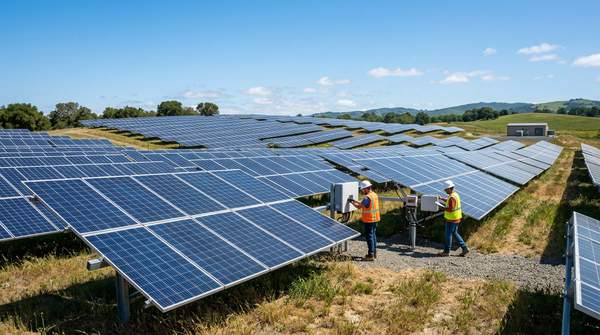
Alaska's long summer days can support significant seasonal production, while shorter winter days limit available generation. System estimates should account for this variation, as well as roof or land conditions, shading, snow coverage, and equipment configuration. A site assessment can help determine whether a roof-mounted or ground-mounted array is practical and what production assumptions are reasonable.
Solar Is a Planning Decision, Not Just an Equipment Purchase
A commercial solar project affects more than the building's roof. It can involve structural suitability, electrical integration, site access, permitting, utility coordination, construction schedules, and future maintenance. For an operating business, the installation plan should also consider how work will be coordinated to minimize disruption.
Decision-makers should ask for a clear explanation of the proposed system's expected production, the assumptions used in the financial model, and the equipment included. It is important to understand how monitoring will work, how performance issues will be identified, and who will provide support after commissioning.
GENSOLAR describes a process that includes consultation, energy assessment, expert installation, and post-installation support. That structure can help customers work through technical questions before committing to a project. The proposal should be specific to the facility and make clear which services are included in the scope.
Battery Storage for Critical Loads
A battery can store electricity for later use and may provide backup power when a utility outage occurs, if the system is configured with compatible equipment. For a commercial facility, storage can be designed around selected critical loads or a broader portion of the operation, depending on power requirements, battery capacity, and project budget.
The key is distinguishing power from energy. Power capacity determines how much load the battery can supply at a given moment. Energy capacity affects how long those loads can operate. Equipment with high startup demand can also influence sizing, so the assessment must consider more than a simple estimate of daily kilowatt-hour consumption.
Battery storage may be valuable where short interruptions are particularly disruptive or where a facility wants to use more of its own solar generation. However, storage has limits. A battery does not create energy, and prolonged outages may require a recharge source or another form of backup. The system design should make those limits clear.
Generators for Longer Outages and Demanding Loads
Generators remain an important option for facilities that require sustained power during outages or need to support loads that are difficult to serve with batteries alone. GENSOLAR lists HIPOWER generator solutions for residential and light commercial, commercial and industrial, and mobile power and rental applications. The available options include diesel and applicable dual-fuel models.
Generator selection depends on the required electrical capacity, operating conditions, fuel arrangements, expected runtime, and service needs. A facility should identify the systems that must remain operational, the demand those systems create, and whether equipment starts simultaneously. A qualified assessment can then establish the capacity and configuration appropriate to the site.
Fuel logistics matter, particularly for remote facilities or locations where resupply may be difficult during severe weather. Managers should consider storage or supply arrangements, routine maintenance, safe access, and the service plan. The generator itself is only one part of a reliable backup arrangement; transfer equipment, controls, installation quality, and ongoing care are equally important.
Combining Solar, Storage, and Generation
Solar, batteries, and generators can serve complementary purposes. Solar can offset some grid consumption when sunlight is available. Batteries can shift energy to later periods and provide backup to supported loads. Generators can supply electricity when longer-duration backup is needed, provided fuel and operating conditions remain suitable.
An integrated system requires careful design. The equipment must be compatible, controls must coordinate operation, and the system should be tested to confirm how it responds to an outage. Managers should understand which loads are backed up, how stored energy is prioritized, and what happens when solar production is limited.
Not every facility needs all three technologies. A daytime business with manageable loads may begin by evaluating solar alone. A critical operation may place greater emphasis on generator capacity and backup distribution. A facility with both cost-management and resilience goals may explore a combined system. The right choice follows from the operating requirements, not from a one-size-fits-all package.
Review Financing and Incentive Assumptions Carefully
Project economics may include financing, available incentives, maintenance, and the value of electricity generated over time. These factors need to be assessed using current terms and the specific facility's circumstances. Tax treatment and incentive eligibility can differ between residential and commercial projects, and rules may change.
GENSOLAR's website notes that commercial tax credits may apply depending on project timing and eligibility, and that rural energy grant opportunities may be available. These possibilities should be verified before they are included in a project's financial forecast. A business's tax adviser can evaluate eligibility, while the installer can help explain the equipment and project details relevant to the assessment.
Ask for financial projections that identify the assumptions used, including system production, electricity rates, financing costs, and maintenance. Treat estimated savings and payback as scenarios rather than guarantees. A realistic business case should remain useful even when actual energy production or future rates differ from projections.
Plan for Operations After Installation
A commercial energy system should have a clear plan for monitoring, inspection, and service. Staff should know who is responsible for checking system alerts, how to report a fault, and what steps to take during an outage. Maintenance schedules and access requirements should be incorporated into facility procedures.
For backup generation, confirm fuel arrangements, testing requirements, and maintenance responsibilities. For batteries, understand monitoring, operating modes, and manufacturer guidance. For solar, clarify how performance is reviewed and how service requests are handled. These practical details help protect the value of the investment and make the system easier to manage.
Facilities should also periodically review whether their original load assumptions still reflect current operations. New equipment, expanded hours, or changed critical functions can alter the system's usefulness. A review can identify whether settings or future expansion need to be considered.
Discuss Commercial Energy Options With GENSOLAR
Commercial energy planning is most effective when cost, reliability, and the facility's operating needs are evaluated together. Solar, battery storage, and generator systems offer different capabilities, and their suitability depends on site conditions, load requirements, fuel access, and the length of outages a facility needs to prepare for.
GENSOLAR serves commercial and public-sector customers across Alaska, with solar installation and generator options that can be assessed against a facility's goals. To discuss an energy project, call 907-290-3333 or email info@gensolar.net. A consultation can help establish the right questions, clarify feasible system options, and outline the next steps toward a property-specific proposal.