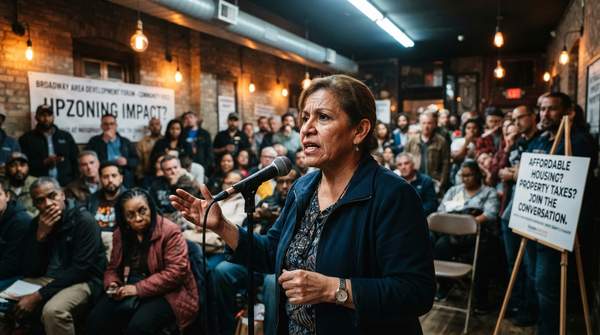
Upzoning is a change to a city's zoning map that allows larger, denser buildings on a given parcel than the previous rules permitted. In Chicago, where every block sits inside a mapped zoning district that caps building height, bulk and use, upzoning is the single most consequential lever residents and alderpersons can pull to reshape a street. The current flashpoint is a proposal to upzone the Broadway corridor on the North Side, which would shift much of the street to the B3-5 designation and, by one estimate, allow roughly 18,000 new housing units along the corridor. Whether that capacity translates into affordability, higher property taxes, or a changed neighborhood depends on which argument you find persuasive — and both sides come armed with evidence.
The Debate: Upzoning's Impact on Chicago Neighborhoods
Start with the mechanics. A zoning district is the regulatory category — residential, commercial, mixed-use, and so on — assigned to each parcel, and density describes how much building volume that category permits. Upzoning loosens those limits; downzoning tightens them. Chicago's districts carry lettered codes, and the Broadway proposal would move much of the corridor to B3-5, a designation that permits substantially larger mixed-use buildings than the district it would replace. Because zoning capacity is parcel-specific, an upzoning does not force anyone to build; it removes a ceiling.
Proponents frame the change as a supply-and-demand intervention. Writing in A City That Works, Richard Day argued that the Broadway upzoning "could result in more affordable housing options, increased transit ridership, more customers for local businesses, and more tax revenue for the City." His figure of about 18,000 newly permitted units comes from calculations by Steven Vance, founder of the development-data site Chicago Cityscape, who also cautioned against expecting an immediate flood: Broadway already carries unused zoning capacity, so the realistic expectation is a faster pace of housing construction over the next several years rather than an overnight transformation. Day's broader claim is that broad upzoning "ensures that every property has an equal shot at adding density," spreading development potential rather than concentrating it on a few parcels.
Supporters at an October 2025 rally covered by Streetsblog Chicago connected the proposal to the city's affordability shortfall. One speaker, Kelly, cited an estimate that Chicago has 120,000 fewer affordable housing units than needed, and said more residents on Broadway would make the corridor safer through the "eyes on the street" phenomenon. That is advocacy testimony, not a measurement, but it reflects the pro-density coalition's core premise: more permitted housing is the precondition for more actual housing.
Opponents marshal their own research. The planning site Planetizen notes that upzoning debates are among the defining controversies of the current planning era, and that "both sides can find evidence to support their arguments." Opponents, Planetizen observes, point to upzoning's effect on land values, to new density's effect on neighborhood character in single-family areas, and to gentrification and displacement in low-income neighborhoods and areas where most residents are Black, Indigenous, or people of color.
The Chicago-specific evidence gives that concern empirical footing. An academic study of Chicago's 2010s-era transit-oriented zoning reform, published by researcher Yonah Freemark, used difference-in-differences tests on property transaction prices and housing construction permits and detected "significant, robust increases in values for transactions on parcels that received a boost in allowed building size." In plain terms: upzoning raised what upzoned land was worth. Whether that is a windfall for owners or a burden on renters depends on the parcel — and on who is making the argument.