Chicago residents can report a pothole in three ways: through the city's 311 website, the CHI311 mobile app, or by calling 311 directly. Repairs are generally completed within three to six days of the first report, according to the Chicago Department of Transportation, though weather and street type can extend that window. If your car is damaged, you can seek reimbursement from the city, but the process demands specific documentation and patience: an ABC7 Chicago review of nearly 1,400 claims found 46% approved, 37% denied, and 18% still pending, with an average payout of $333.
How to Report Potholes and Road Damage in Chicago
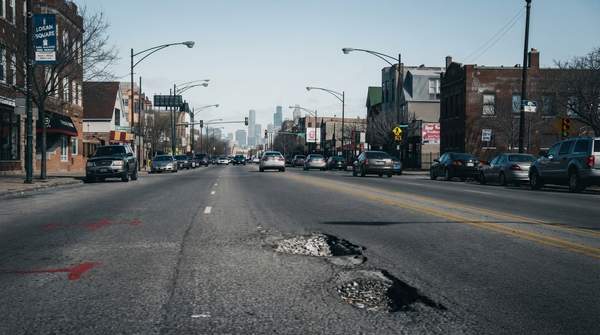
The city's reporting system works best when residents identify what they're actually looking at. CDOT defines a pothole as an irregularly shaped pavement hole formed when street surfaces freeze and thaw and crack, allowing water to seep under the pavement. As that water freezes and thaws, it expands the surface crack. Potholes usually occur in a traffic lane, are normally irregular in shape and size, and tend to be relatively shallow unless ignored, with the base of the street still observable.
Two other kinds of road damage require different handling. A utility cut is usually a square cut in the pavement made for water or sewer repairs. A cave-in, sometimes called a sinkhole, can occur when utility services housed underneath the roadway are damaged, and is usually found near a manhole or catch basin. Cave-ins can range from a slight dip in the roadway to a deep hole requiring immediate attention. CDOT asks residents who see a utility cut or a sinkhole to call 311 directly rather than using the online pothole request.
When you file a pothole report, include the location of the pothole. The more precise you can be about the address, the better the routing. Once a report reaches 311, it enters CDOT's repair queue. The city also publishes a Pothole Tracker map showing potholes patched by the Department of Transportation in the last seven days; clicking a dot shows potholes filled by address, the date the request was completed, and the total number of potholes filled on that block, with duplicate requests removed.
One boundary matters before you file: this guide covers streets maintained by the City of Chicago. State-maintained expressways fall under the Illinois Department of Transportation, which has its own claim form and requirements, including photos of the pothole and vehicle damage, repair estimates, and proof of vehicle ownership.