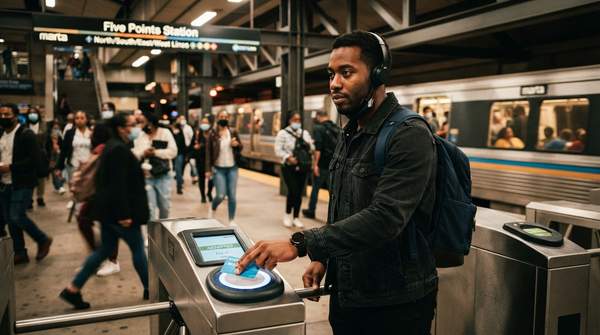
BART's Milpitas Station saw its ridership surge by over 160 percent during the World Cup, a dramatic indicator of how major events can test and transform urban transit. Thousands more commuters, many attending the matches, relied on public transportation, creating a bustling hub of activity where previously there was regular weekend traffic. The sheer volume of people revealed the immediate and profound impact these global spectacles have on local infrastructure, proving public transit's essential role in managing such large-scale movements.
However, while World Cup events delivered record-breaking ridership and significant federal funding to public transit, they simultaneously exposed the operational limits and infrastructure challenges inherent in these systems. The temporary success often masked deeper, systemic fragilities that only event-specific funding and meticulous planning could temporarily patch over.
Therefore, while major sporting events offer a powerful catalyst for transit investment and public engagement, cities must strategically plan for both capacity expansion and operational resilience to fully capitalize on these opportunities. This approach ensures benefits extend beyond a single event, fostering long-term improvements in urban mobility.
Record Crowds, Record Rides
The Santa Clara Valley Transportation Authority (VTA) transported 37,642 passengers to and from the opening World Cup match on June 13, according to sustainable-bus. Just three days later, VTA carried more than 39,500 passengers to and from the Austria–Jordan match on June 16, setting a new tournament ridership record, sustainable-bus reported. The figures of 37,642 and 39,500 passengers reveal a rapid escalation in demand, pushing VTA's capacity to new highs within days.
NJ Transit moved 21,578 fans via bus and rail for the first World Cup game, according to Trains Magazine. Simultaneously, the MBTA sold out all 20,000 tickets for special trains to the first World Cup match in Foxborough, Trains Magazine noted. The statistics of 21,578 fans and 20,000 tickets collectively confirm public transit's unparalleled ability to scale operations for mega-events, accommodating tens of thousands of attendees far more efficiently than individual car-based solutions. The sheer volume of passengers across multiple cities suggests that without robust public transit, the logistical backbone of such global spectacles would simply collapse, leading to widespread congestion and missed events.
Pushing Systems to the Limit
The World Cup pushed the Bay Area's public transit systems to their limits with the first late-night match on Tuesday, according to SFGATE. The operational strain occurred despite significant ridership, with Caltrain carrying nearly 7,000 passengers to and from the event, sustainable-bus reported. The intense demand, particularly during extended service hours, exposed the fundamental challenges of existing infrastructure and operational models.
TransLink in Vancouver recorded its busiest Saturday for a BC Place event since the 2010 Winter Olympics, according to sustainable-bus. While systems successfully moved large crowds, the sustained intense demand, especially during late-night events, revealed a critical vulnerability: even with high capacity, existing infrastructure struggles to maintain resilience under sustained peak loads without significant pre-planning and potential compromises. This suggests that the true test of a transit system isn't just moving people, but doing so without compromising daily service or future maintenance.
Why Transit Became Indispensable
During the World Cup, private mobility solutions faced inherent limitations when confronted with massive crowd logistics. Uber, for example, moved over 6,500 people to a World Cup game, but some fans were stranded due to rideshare vehicle restrictions, according to Trains Magazine. The incident of Uber moving over 6,500 people to a World Cup game, but some fans being stranded due to rideshare vehicle restrictions, sharply contrasts public transit's capacity, which handles tens of thousands per event, with the inherent limitations of private services. The critical role of public transit was amplified by these failures in alternative transport, making it the indispensable choice for many attendees. The World Cup's record ridership, including BART's 160% surge at Milpitas Station, confirms public transit as the only viable solution for mass event logistics, rendering private rideshare services fundamentally inadequate for such a scale. This situation implies that relying on private options for major events not only creates chaos but also risks alienating attendees who depend on reliable transport.
Federal Support and Local Impact
Host cities received substantial backing to prepare their transit systems for the World Cup. The Federal Transit Administration distributed $100 million in public transportation support for host cities through formula funding from the Consolidated Appropriations Act of 2026, according to The Eno Center for Transportation. The $100 million in federal support bolstered transit infrastructure and operations in anticipation of the event, providing a temporary but necessary capacity boost. However, despite this $100 million, the fact that Bay Area systems were 'pushed to their limits' reveals that event-specific funding often serves as a temporary patch over chronic underinvestment. While beneficial for immediate event needs, this funding does not represent a sustainable solution for everyday transit resilience. The reliance on such external catalysts implies that without them, systems might struggle to justify or secure necessary long-term upgrades, leaving a critical gap between event-driven boosts and daily operational needs.
Building for Future Mega-Events
Strategic infrastructure projects, timed with major events, offer a proactive approach to leveraging such occasions for long-term transit development. The latest phase of the Kansas City Streetcar expansion, lengthened by 1.2 additional miles, was deliberately timed to open in advance of the World Cup, according to The Eno Center for Transportation. The deliberate timing of the Kansas City Streetcar expansion, lengthened by 1.2 additional miles, confirms that major events can serve as significant catalysts, driving otherwise slower-moving infrastructure upgrades. While beneficial for event readiness, this also reveals a pattern where substantial investments depend on external pressures rather than consistent, long-term planning for daily resilience. The temporary nature of this event-specific focus could mask underlying needs for sustained investment in public transit, implying that cities must move beyond event-driven cycles to achieve true system robustness.
Lessons for Urban Mobility
As host cities look towards future international events beyond 2026, the strategic balance between temporary event-driven funding and sustained investment in transit infrastructure will remain a central challenge for agencies like the Santa Clara Valley Transportation Authority. It appears that true long-term operational resilience will hinge on whether cities can translate event-specific boosts into consistent, foundational upgrades, rather than merely patching over existing vulnerabilities.