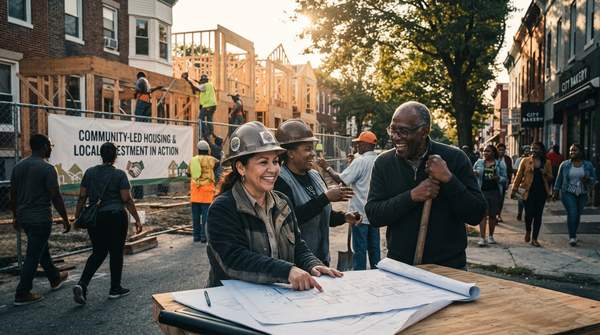
At public engagement events shaping local development in 2026, older, white homeowners are often overrepresented, while renters and people of color are frequently left out, skewing decisions that affect entire neighborhoods. This demographic imbalance directly impacts how city council decisions influence neighborhood development, often prioritizing existing property values over broader community needs. Such skewed participation can lead to policies that fail to address the urgent housing challenges faced by a significant portion of the population.
City councils, despite their extensive power to address housing crises and guide local development, consistently enact policies that favor the property values and interests of older, white homeowners. This outcome results from their disproportionate influence in public engagement, effectively disadvantaging renters and people of color. The tension lies in the significant power city councils wield over local development and services, contrasted with public input that often fails to represent the full diversity of the community.
Therefore, local development and service provision will likely continue to reflect the priorities of a vocal minority, potentially exacerbating existing inequalities in housing and neighborhood resources. City Councils and County Boards, through their control of land use and zoning regulations, can act as either barriers or facilitators for housing development, actively shaping a community's physical and social landscape, according to Endhomelessness.
This fundamental power means that local legislative bodies are not merely administrative entities but are active architects of a community's future. Their decisions dictate where housing can be built, what types of housing are permitted, and how quickly projects can advance, directly influencing affordability and accessibility for all residents. The pervasive influence of these bodies shapes everything from property values to the availability of essential services.
Direct Levers for Development and Housing
City councils possess specific policy tools to directly impact housing supply and affordability. Local governments can make publicly-owned land available to affordable housing developers, a strategy that lowers development costs and addresses siting challenges, as reported by Endhomelessness. Furthermore, these local bodies control permitting processes and other approvals that significantly impact the scale and speed of affordable housing production.

These specific policy and procedural controls demonstrate how councils can either accelerate or impede the creation of much-needed housing. The dual capacity of these specific policy and procedural controls to either accelerate or impede the creation of much-needed housing highlights the critical role of local government in addressing, or inadvertently worsening, housing shortages. Companies and developers seeking to build affordable housing face an uphill battle not just against economic factors, but against a public engagement system, highlighted by Localhousingsolutions, that empowers a vocal minority to act as a barrier to development, despite the clear capacity of local governments to facilitate such projects.
The Bias in Public Input
The democratic deficit in local decision-making processes often emerges through public engagement. In practice, older, white homeowners are often overrepresented, and renters and people of color are often underrepresented in public engagement events, according to Localhousingsolutions. This imbalance in public participation means that council decisions, while seemingly democratic, may not accurately reflect the diverse needs and priorities of the entire community.
This demographic skew creates a scenario where the voices of those most impacted by housing insecurity are frequently marginalized. Based on Localhousingsolutions' findings, city councils, by relying on current public engagement models, are inadvertently prioritizing the property values and comfort of a narrow demographic over the urgent housing needs of their entire constituency, particularly renters and people of color.
What are the key responsibilities of a city council?
City councils are typically responsible for setting the city's budget, enacting local ordinances, overseeing public safety services like police and fire departments, and maintaining infrastructure such as roads and utilities. They also often appoint city managers and other key municipal officials.
How do zoning laws affect neighborhood growth?
Zoning laws dictate the types of buildings permitted in specific areas, their maximum height, density, and intended use, influencing whether neighborhoods develop with single-family homes, multi-unit apartments, or commercial spaces. These regulations directly shape property values and the overall character of urban development.
What is the process for approving new developments in a city?
The approval process for new developments typically involves submitting a proposal to the city's planning department, undergoing review by a planning commission, and participating in public hearings. The city council then casts a final vote on the project, often after considering recommendations and public feedback.
How can citizens influence city council decisions?
Citizens can influence city council decisions by attending public meetings, contacting their elected representatives directly, forming or joining community advocacy groups, and participating in local elections. Engaging in these avenues allows residents to voice their concerns and support for specific policies.
Consequences for Residents' Lives
Local governments can enact eviction protections or rent control policies to help keep people in their homes and slow the inflow into homelessness, as highlighted by Endhomelessness. The presence or absence of such protective policies directly determines the stability and affordability of housing for many residents, illustrating the direct impact of council choices on individual lives.
These policy decisions have tangible impacts on the security and well-being of residents. The extensive control local governments wield over housing development and tenant protections (Endhomelessness) becomes a double-edged sword when public input is skewed; instead of being a tool for equitable growth, it risks becoming a mechanism for maintaining existing power structures and exacerbating housing inequality. By late 2026, the absence of more inclusive public engagement strategies will likely see renters and people of color continue to face disproportionate housing insecurity in many urban areas.