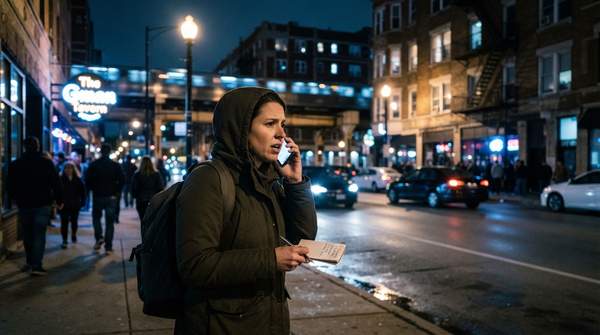
Most noise complaints in Chicago begin with a single step: calling 311, filing online, or using the CHI311 app, which routes the complaint to the department responsible for that type of noise. The exceptions matter. Aircraft noise around O'Hare and Midway goes to a dedicated hotline, and bars and venues follow a licensing route through the Department of Business Affairs and Consumer Protection. What separates an effective complaint from a dead-end one is documentation: the date, time, duration, and character of the noise, plus a saved tracking number for follow-up.
Understanding Chicago's Noise Ordinances
Chicago's noise rules are comparative rather than purely numeric. For amplified sound on the public way, the standard is that it be no louder than an average conversation at 100 feet, with the same standard enforced more tightly between 8:00 PM and 8:00 AM, according to the noise-ordinance reference published by DecibelPro. That public-way standard is what most often applies to the loudest summertime complaint: amplified sound from vehicles and from the public way.
Two features of the ordinance shape how complaints work in practice. Schools, libraries, churches, hospitals, and nursing homes are designated noise-sensitive, and stricter limits apply nearby — a fact worth noting in your complaint if the source is close to one of these. The ordinance also addresses vibration alongside sound, which matters for construction and industrial complaints that are felt as much as heard.
Not every annoyance is a violation. A complaint in Chicago has to clear three bars, as DecibelPro puts it: the noise must breach the applicable limits, during the hours they apply, and someone must be available to measure it. A neighbor who is loud but within the limits fails the first bar before anyone is called.
Chicago Noise Complaint Decision Guide
The table below categorizes the most common noise complaints and maps each to its reporting channel and the department that typically handles it. The categorization follows the ordinance descriptions and the city's own reporting guidance.
| Type of Noise | Primary Reporting Channel | Responsible Department |
|---|---|---|
| Amplified sound from vehicles or on the public way (loud music, parties) | 311 by phone, online, or the CHI311 app (non-emergency) | Chicago Police Department, which handles parties and immediate disturbances |
| Construction and demolition noise and vibration | 311 by phone, online, or the CHI311 app | Department of Buildings or Department of Business Affairs and Consumer Protection, based on typical handling; ongoing sources may go to the Department of Environment |
| Noise from bars and venues near residential blocks | 311, with licensing follow-up | Department of Business Affairs and Consumer Protection, through its licensing route |
| Aircraft noise (O'Hare and Midway) | O'Hare Noise Hotline (1-800-435-9569, or 311 within the city), the online complaint form, or the CHI311 app | Chicago Department of Aviation, which tracks complaints as data in the Airport Noise Management System reports |
For aircraft noise specifically, the Chicago Department of Aviation counts as official complaints those submitted by telephone to the O'Hare Noise Hotline, through its online form, or via the CHI311 app. The toll-free hotline is 1-800-435-9569 for suburban communities, while 311 works within the city. If the online form returns an error, the department asks callers to phone the hotline and report that the webpage is down.
Preparing Your Complaint: Essential Information
Before filing, gather the details that let an inspector or officer verify a violation. DecibelPro's documentation guidance for Chicago residents centers on a few concrete items:
- Log the date, time, and duration of each noise episode, so the city can match your complaint to the hours the limits apply.
- Describe the type of noise — amplified sound, construction, vibration — and whether it comes from a vehicle, a venue, or a work site.
- Estimate the distance for public-way noise: pace out roughly how far you are from the source, since the standard is audibility relative to ordinary conversation at 100 feet.
- Note nearby noise-sensitive locations — a school, library, church, hospital, or nursing home — because the designation changes what is permitted.
- Keep a written noise log across multiple episodes rather than relying on memory.
A phone microphone is not a calibrated instrument, as DecibelPro cautions, but a recorded session establishes a pattern. The key is that the complaint must describe a breach of the limits, during the hours they apply, at a time someone can respond.
Filing and Tracking Your Noise Complaint
The City of Chicago's complaint intake runs through 311 by phone, online, or the CHI311 app. For police matters, 311 is the non-emergency channel: the Chicago Police Department describes it as covering situations that do not involve a crime in progress or an immediate threat to life, injury, or major property damage — those belong to 911.
After filing, obtain your service request number and save it. That number is what makes the complaint trackable: it allows you to check status, follow up with the responsible department, and, if the problem persists, escalate with a documented record. Residents frustrated by inaction can also bring the tracking number to their alderman's office, which can inquire with the department on your behalf.
This guide covers reporting violations of city ordinances, not legal advice, the administrative-hearing or court processes that can follow a complaint, or neighbor disputes that fall within legal limits.
Effective Reporting for Quieter Neighborhoods
To effectively address noise violations in Chicago, residents should accurately identify the noise type, gather specific details, and use the designated city reporting channel — primarily 311 or the O'Hare Noise Hotline — to file a complaint and obtain a tracking number for follow-up. The measurable indicator of success is a received 311 service request number or O'Hare Noise Hotline complaint ID, and subsequent communication or action from the responsible city department. If a complaint closes without resolution, that number is the record you use to refile, escalate to your alderman, or document a recurring pattern for the next report.