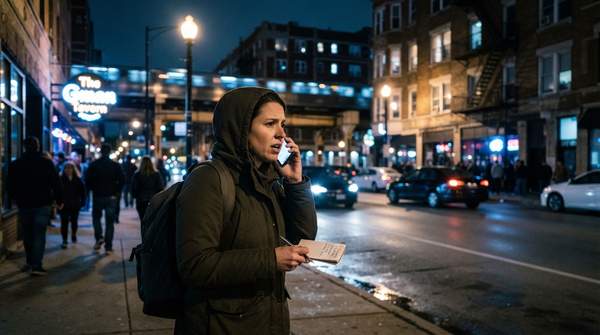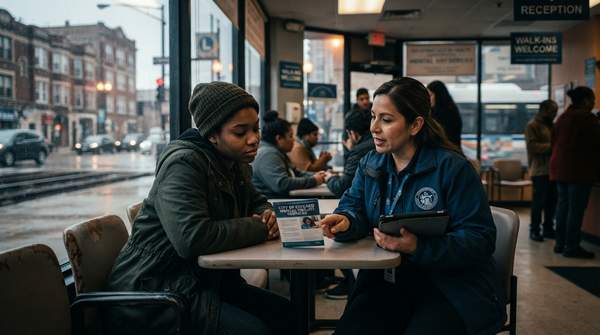
Chicago residents who need ongoing, non-crisis mental health support can get it directly from their city government. The Chicago Department of Public Health operates mental health centers that provide outpatient care for emotional, traumatic, or behavioral difficulties, and the department states plainly that these services are provided free of charge to all Chicagoans who are unable to pay. Getting started is a matter of matching your situation to the right entry point — a crisis line, an intake phone call, or a neighborhood clinic — and this guide walks through each.
Your First Step to Mental Health Support in Chicago
The single most consequential decision a resident makes is which door to walk through first: the emergency system or the outpatient system. The city's own guidance separates these paths clearly, and starting in the wrong place can delay care when it matters most. Use the matrix below to identify your situation before making a call.
| Your Situation | First Step to Take | Key Information |
|---|---|---|
| Immediate crisis with risk of harm | Call 911 | The city directs residents to 911 for situations requiring an immediate emergency response. |
| Mental health crisis, not life-threatening | Call or text 988 | 988 connects to the Suicide & Crisis Lifeline, which the city recommends when you or someone you know is in crisis. |
| Ongoing emotional, traumatic, or behavioral difficulties | Call 312-747-1020 or 311 for intake | The CDPH intake line handles intake and screening for outpatient mental health services. |
| Prefer to find a location yourself | Use the Mental Health Equity Initiative (MHEI) interactive map | Locates city-operated clinics and partner providers near you; care is available regardless of ability to pay, immigration status, or insurance. |
The distinction the city draws is straightforward: 988 and 911 exist for acute crisis moments, while the outpatient system — the intake line and the MHEI map — exists for everything that does not require immediate crisis intervention. A resident who calls 312-747-1020 during a life-threatening emergency loses critical time; a resident who calls 911 for routine anxiety has walked into an emergency system designed for a different problem.
Eligibility for City-Provided Mental Health Services
CDPH has constructed its eligibility rules to be as low-barrier as the law allows. Through the Mental Health Equity Initiative, launched in October 2020, the department funds services at seven city-operated clinics and a partner network of mental health providers. The program's stated terms are that outpatient services are available to Chicagoans regardless of ability to pay, immigration status, or health insurance.
The financial rule is explicit: services are provided free of charge to all Chicagoans who are unable to pay. There is no income documentation requirement described in the program's materials, and immigration status is not a factor in access. For residents who are uninsured, underinsured, or undocumented, the city's system is designed so that inability to pay is not a barrier to entering care.
Step-by-Step: Accessing Non-Crisis Outpatient Care
For a resident whose situation is not an emergency, the path into care follows a consistent sequence:
- Confirm this is not a crisis. If there is immediate danger or a life-threatening situation, call 911. If you are in crisis but not in immediate danger, call or text 988.
- Call the intake line. The CDPH Mental Health Clinic Intake Line at 312-747-1020, or 311, connects residents to intake and screening for outpatient services. The city also directs residents who are unsure who to call to the Greater Lawn West 55th Street Health Hub at 312-747-1020 for help finding the right services.
- Or find a clinic directly. The MHEI interactive map on the city's website shows city-operated clinics and partner providers by neighborhood. Residents can also dial 211 Metro Chicago to get connected to mental health services near them.
- Complete intake and screening. Every mental health center provides intake and screening as the entry point to care.
- Begin services. Support is based on needs the consumer identifies, including their own goals, objectives, and specific mental health services.
The intake process is consumer-directed in the city's description: residents define their own goals and objectives, and the service plan follows from what they identify as their needs rather than from a template imposed by the clinic.
City-Operated Mental Health Clinics and Services
All seven city-operated mental health centers — which CDPH describes as part of the Mental Health Equity Initiative network — provide the same core set of outpatient services for adults, children, and adolescents:
- Intake and screening, the entry assessment that routes residents into appropriate care
- Individual therapy, one-on-one counseling sessions
- Group therapy, facilitated sessions with peers
- Case management, coordination help connecting to other services and supports
- Medication management, including same-day medication appointments for residents who need timely access to psychiatric medication
Beyond clinical care, every CDPH mental health center hosts the Healing Arts Chicago program, which offers free creative classes and workshops — including movement, yoga, sound and body meditation, music, painting, poetry, writing, and storytelling — designed to support mental health and wellness throughout the year. This is available to residents whether or not they are enrolled in clinical services at the center.
Taking the Next Step for Your Mental Health
Chicago residents seeking non-crisis mental health support should contact the CDPH Mental Health Clinic Intake Line at 312-747-1020 or 311, or use the MHEI map to find a local clinic, after confirming their situation is not an immediate crisis.
The measure of success is concrete: successful connection to an intake specialist or a scheduled initial appointment at a CDPH clinic. If a first call does not reach a person, the resident has not yet completed the step — the alternatives (the MHEI map, 211 Metro Chicago, or the Health Hub line) exist precisely so that one full voicemail box or one busy signal does not become the end of the attempt. For residents who reach this article in an acute moment, the first number is different: 988, by call or text, or 911 for immediate danger.
Sources
- CDPH Mental Health Centers — Chicago
- Mental Health Crisis Resources in Chicago
- Chicago — Hopeful Cities