Developers have unveiled a $10 billion plan to build a 75,000-seat domed stadium for the Chicago Bears at the heart of a 100-acre mixed-use district on the Near South Side, anchored by the former Michael Reese Hospital site in Bronzeville. The "Bronzeville Lakefront" proposal, pitched by Capri Investment Group founder Quintin E. Primo III and the GRIT Chicago consortium, includes more than 5,000 residential units, hotels, restaurants, a 28-acre park and major transit upgrades. Here is a structured breakdown of what is being proposed, alongside the benefits developers are promising and the concerns community leaders have already raised.
The $10 Billion Bronzeville Lakefront Proposal: An Overview
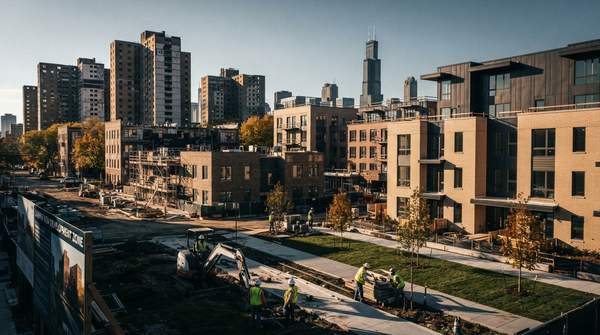
The proposal would transform roughly 100 acres that include and surround the former Michael Reese Hospital site in the Douglas neighborhood, extending to the Prairie Shores apartment complex and over the McCormick Place marshalling yard. Reporting on the developers' announcement describes a single integrated district rather than a stand-alone stadium: the domed stadium would sit at the center, surrounded by housing, commercial development, recreational facilities, cultural attractions, hotels and public space. The development team, led by Capri Investment Group, has indicated a willingness to purchase the Bears' Arlington Heights property if the team's existing investment there is an obstacle to considering a Chicago location. The financing structure is described as public-private, but it remains preliminary, and no definitive breakdown of public versus private costs has been released. The Bears have not publicly responded to this specific proposal.
A New Home for the Bears: The Proposed Stadium
The stadium itself is the anchor of the entire plan: a domed venue with a capacity of 75,000, designed for major sporting events and concerts. Developers are positioning it as the catalyst for the surrounding entertainment district, with the explicit goal of keeping the Bears in the city rather than allowing the team to complete its move toward Arlington Heights. The offer to buy the team's suburban property is the clearest signal of how central the stadium is to the developers' pitch — they are willing to absorb the Bears' existing land investment to clear the path for a lakefront return. Whether the team engages with that offer is the single biggest open question hanging over the proposal, and no evidence from the announcement suggests an answer is imminent.
Residential Development and Community Protection
The housing component is where the proposal's community stakes are highest. Developers plan more than 5,000 new residential units in and around the district, including at least 1,000 units designated as affordable and senior housing, according to reporting on the plan. But part of the project touches the existing Prairie Shores complex at 2937 S. King Drive, where demolition could remove as many as 1,000 existing apartments. Developers have pledged to build 1,500 replacement units before removing any existing housing, and to propose tenant protections including priority access to replacement housing, five years of rent protections and additional assistance for longer-term residents.
Reporting on the developers' statements notes that roughly 200 residents who have lived in the complex for at least five years would be guaranteed new housing in the development at rates fixed to their current Prairie Shores rents. Critically, the developers themselves say the details of those protections still need to be worked out with residents and written into enforceable agreements — a caveat that community leaders are likely to hold them to.
Beyond the Stadium: Commercial and Public Spaces
The non-stadium elements are what turn the plan from a sports venue into a year-round district. The proposal includes hotels, restaurants, retail, recreational facilities, cultural attractions and a 28-acre park, along with what developers describe as major transit upgrades. This reflects a broader development trend in which cities and franchises surround stadiums with continuous commercial and residential activity rather than parking lots, creating multiple sources of foot traffic and revenue across the week and the year. For Bronzeville residents, the practical questions about these components are concrete: what the transit upgrades would actually deliver, who the retail and hospitality jobs would go to, and whether the park and public spaces remain genuinely public as the plan moves from renderings toward enforceable commitments.
Bronzeville Lakefront Proposal: Key Components at a Glance
The table below organizes the proposal's major components by their proposed scale and the stated benefits and concerns attached to each, drawing on the developers' announcement and contemporaneous news reporting. Reading across the rows shows how each piece of the plan pairs a quantified ambition with a specific community trade-off.
| Component | Proposed Scale & Key Features | Stated Benefits & Community Concerns |
|---|---|---|
| Overall project | $10 billion total investment across roughly 100 acres spanning the former Michael Reese Hospital site, Prairie Shores and the McCormick Place marshalling yard; public-private financing described as preliminary. | Developers and local officials highlight housing investment, jobs, new businesses and public amenities; Ald. Lamont J. Robinson (4th) says success must be measured by protecting existing residents and ensuring meaningful community participation. |
| Domed stadium | 75,000-seat domed venue for major sporting events and concerts, positioned as the district's anchor; developers offered to buy the Bears' Arlington Heights property. | Promised catalyst for housing, jobs and economic opportunity; the Bears have not publicly responded to this proposal, leaving the anchor tenant unresolved. |
| Residential units | More than 5,000 new units, including at least 1,000 designated affordable and senior housing; up to 1,000 existing Prairie Shores apartments could be demolished, with 1,500 replacement units pledged first. | Proposed tenant protections include priority access to replacement housing, five years of rent protections, and guaranteed fixed rates for roughly 200 long-term residents; developers say the details still need to be worked out with residents and put into enforceable agreements. |
| Public & commercial space | Hotels, restaurants, retail, recreational facilities, cultural attractions, a 28-acre park and major transit upgrades. | Aimed at creating a year-round mixed-use district; community leaders emphasize that any large-scale project must guarantee community jobs and protect current residents. |
One economic claim deserves its own attribution: Capri and GRIT estimate the project could generate approximately $14 billion in regional economic activity during development and $1.5 billion annually once operational. Those figures are the developers' own projections, not independent analysis, and readers should treat them as the pitch rather than a forecast.
Stated Community Benefits and Key Concerns
The developers' framing is expansive. "Our vision is to make the Bears a catalyst for new housing, jobs, businesses and economic opportunity that will benefit Chicago long after the final whistle blows," the developers said in announcing the plan. Local leadership has responded with support for investment paired with explicit conditions. "Bronzeville is one of Chicago's most historically significant communities, and its future deserves investment equal to that legacy," Ald. Robinson said in a statement, adding that "its success must also be measured by how we protect existing residents, ensure meaningful community participation and make certain that the people who live here share in those benefits."
The central tension is displacement: the roughly 1,000 Prairie Shores residents who could be affected are the test case for whether the pledged protections — replacement housing built first, rent guarantees, enforceable agreements — hold as the plan advances. Developers have pledged to incorporate community feedback throughout a process that could take years, especially if the stadium moves forward.
Assessing the Bronzeville Lakefront Proposal
Community leaders and residents can use this breakdown to engage with developers and city officials regarding the specific details and community impact of the Bronzeville Lakefront proposal. The proposal is a developer pitch, not an approved plan: its financing is preliminary, the Bears have not publicly responded, and the tenant protections exist as pledges rather than enforceable agreements. The concrete benchmarks to watch are public statements or official documents from the Chicago Bears, city council, or community groups indicating further engagement or changes to the proposal — each of which would mark a real step toward, or away from, this $10 billion vision becoming reality.
Sources
- Developers Unveil $10B Proposal for New Bears Stadium, Entertainment District at Former Michael Reese Site — WTTW News
- Commercialsearch
- Developers Unveil $10 Billion Plan For Bears Stadium, 100-Acre Project In Bronzeville — Block Club Chicago
- $10B development including new Chicago Bears stadium proposed for Bronzeville site — ABC7 Chicago
- New Bronzeville Development Will Only Displace Residents If New Bears Stadium Is Part Of Project — Block Club Chicago
- Chicago Bears stadium plan: $10B lakefront proposal pitched by developers — FOX 32 Chicago