Residents living near the $9 billion Illinois Quantum and Microelectronics Park were not invited to its groundbreaking ceremony, let alone consulted on its planning, according to the Chicago Tribune. This massive 440-acre development, situated on the former U.S. Steel South Works mill site, marks a significant urban transformation, yet it proceeds without direct local input. The project's sheer scale sharply contrasts with how smaller urban initiatives are managed, exposing a profound imbalance in democratic oversight.
Bureaucratic processes exist to gather public comment for annual federal housing and community development funds, yet the most significant urban transformations proceed without any meaningful community consultation. This creates a two-tiered system where impactful decisions are made undemocratically, prioritizing rapid, high-profile growth over local resident voices.
Without stronger mandates for genuine community involvement across all scales of urban development, 'equitable development' will remain an aspirational slogan for smaller projects. Major transformations will continue to be imposed on communities without local consent. This disjunction erodes trust and exacerbates inequities, particularly for historically disinvested communities.
The Bureaucratic Veil: Participation Without Power
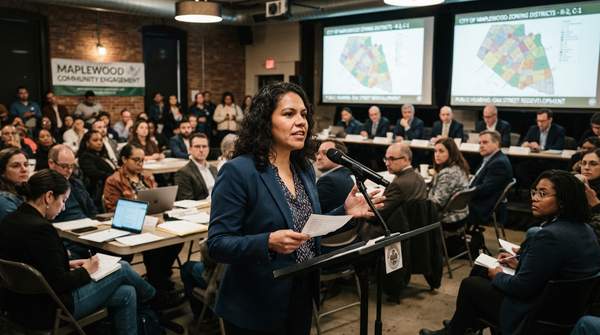
Cumberland County Community Development released the draft of its 2026-2027 Annual Action Plan for public review, according to Cumberland County Government. This plan guides the investment of federal housing and community development funds, with a public review period open until April 20, 2026. This formal process solicits feedback on how relatively small federal grants benefit the community.
These public reviews often involve modest federal allocations, such as the $1,547,514 allocated to Cumberland County in 2023. While such processes appear to foster community engagement, they consistently mask a lack of influence over truly impactful development. Residents are invited to comment on how a few million dollars are spent, yet remain entirely unconsulted on projects worth billions, like the Illinois Quantum and Microelectronics Park. This stark contrast reveals that mechanisms for public participation are robust for smaller, federally-mandated projects, but entirely absent for massive, locally-driven or state-backed developments that profoundly reshape residents' lives.
Cities prioritizing bureaucratic compliance over genuine community engagement for transformative projects trade long-term social cohesion for short-term development velocity. The $9 billion Quantum Park's exclusion of residents, while smaller federal grants undergo meticulous public review, exemplifies this. It suggests communities are given a voice only on projects deemed less critical by developers and local authorities.
Investing in Residents: A Partial Solution?
The City of Fayetteville is investing $1,020,471 in resident-centered programs, according to Fayettevillenc. This investment directly addresses community needs through specific initiatives, aiming to improve local quality of life and foster a sense of belonging.
Economic Development Manager Derrick McArthur received the City's Excellence in Action award on August 5, 2026, for his contributions to such programs. McArthur's recognition, alongside these targeted investments, showcases successful localized efforts to channel resources toward community benefit. Yet, these initiatives remain a comparatively small portion of overall urban development. They may not address the systemic issues of community disempowerment in major projects.
The disparity persists: multi-million dollar federal housing funds require extensive community consultation, but multi-billion dollar urban redevelopments bypass it entirely. This ensures the most impactful decisions remain with a select few, deepening the divide between powerful developers and disenfranchised communities. Such an approach creates an appearance of resident support, while truly monumental projects proceed without local consent, undermining the very idea of equitable development.
Beyond Public Comment: Measuring True Equity
Applying Sustainable Development Goal (SDG) indicators at the building scale allows for more granular measurement and monitoring of progress in sustainable development, according to Nature. This framework assesses impact beyond mere financial inputs, focusing on tangible outcomes for communities.
True equitable development demands moving beyond superficial public comment periods. It requires adopting granular, outcome-based metrics that genuinely reflect community well-being and influence, not just financial inputs. For example, while Cumberland County received $1,589,102 in CDBG allocation in 2021, the focus must extend to how these funds translate into measurable improvements in residents' lives and their actual participation in decision-making, rather than just compliance paperwork. This shift prioritizes long-term social and environmental impacts over short-term economic gains.
The Future of Our Cities: Who Decides?
The current two-tiered system of urban development risks creating cities economically vibrant for some, but fundamentally inequitable and unresponsive to their long-term residents. This approach prioritizes the rapid, high-profile growth favored by large corporations and institutional developers over the sustained well-being and democratic participation of local communities. It potentially erodes trust and exacerbates existing disparities.
If community voices remain excluded from major urban development decisions, future projects like the Illinois Quantum and Microelectronics Park will likely continue to deepen the divide between powerful stakeholders and disenfranchised communities, leaving 'equitable development' as an unfulfilled promise.