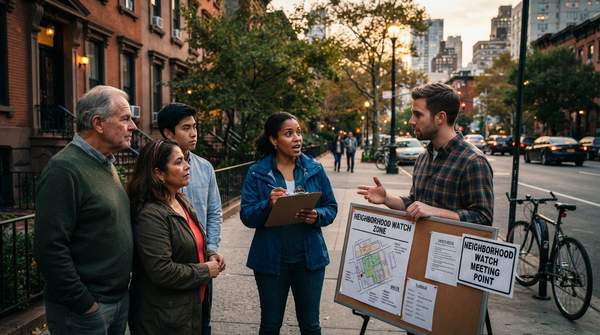
A Neighborhood Watch program is a structured partnership between residents and local law enforcement designed to enhance community safety and communication. By organizing, neighbors can work together to identify and address local concerns, creating a more secure environment for everyone. The success of such a program hinges on a clear, step-by-step process that builds community engagement and forges a strong, collaborative relationship with police or sheriff's departments.
These programs are not about residents taking on law enforcement responsibilities themselves. Instead, they serve as a formal channel for sharing information, learning about available resources, and working collectively on safety improvements. A well-run watch strengthens communication among neighbors and provides a direct link to local government and law enforcement, ensuring that community concerns are heard and addressed effectively.
The Benefits of a United Neighborhood
Organizing a Neighborhood Watch offers significant advantages beyond simply observing and reporting crime. It fosters a sense of community and empowers residents to make a tangible impact on the safety of their own area. According to guidance from the Community Tool Box project at the University of Kansas, these programs provide a structured way for people to share concerns, identify neighborhood strengths, and collaborate on safety enhancements.
The core of a watch program is the partnership between citizens and law enforcement. This relationship is fundamental to community policing, where both groups work together to identify and solve local crime issues. Residents are responsible for being vigilant and reporting suspicious activities, while law enforcement agencies are responsible for investigating those reports and making arrests when evidence supports a claim. This collaboration ensures that the community's efforts are effective and properly integrated with official police work.
Ultimately, a successful Neighborhood Watch can lead to stronger community bonds, improved communication channels, and a greater sense of collective responsibility for the neighborhood's well-being. It provides a platform for residents to learn from crime prevention officers and access valuable information about local crime patterns, helping everyone become more informed and prepared.