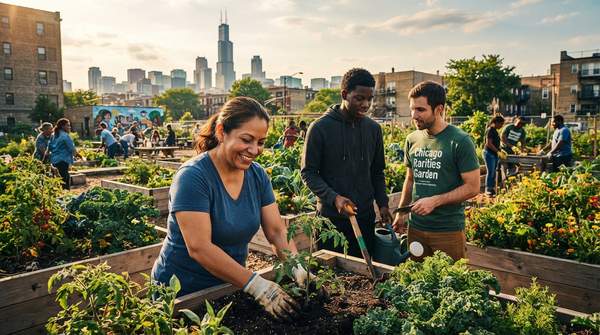
Chicago residents who want to garden with their neighbors have two main paths: start a new community garden from scratch, or claim a plot in an existing one. Both routes run through a small set of well-established local organizations. The Chicago Community Gardeners Association (CCGA) publishes a step-by-step guide for launching a new garden, the Chicago Park District manages dozens of gardens in city parks, and groups like the Urban Growers Collective and El Paseo Community Garden offer plots and memberships directly.
Your Chicago Community Garden Action Plan
The CCGA's guide breaks the startup process into a sequence that begins with people, not plants: create partnerships, sell neighbors on the idea, and invite interested parties onto a garden planning committee from the very start, making sure low-income residents are not excluded. From there, the work moves through assessment, structure, budgeting, and land. The table below sequences those steps and pairs each with the cost considerations organizers should anticipate.
| Step | What to do | Cost and resource considerations |
|---|---|---|
| 1. Build support | Create partnerships and convince neighbors of the good reasons to garden; invite them and other interested parties onto a planning committee from the start. | Survey neighbors and members for talents, skills, and material resources. |
| 2. Assess the project | Fill in project assessment and resources worksheets together, then share the tasks of getting the project going. | Create a budget prioritizing "hardscape" needs plus plants, supplies, and tools; start small. |
| 3. Set up structure | Establish the organization's structure, starting with a leadership team or steering committee, so there is a clear path for decision-making. | Identify sources of donations of physical goods and possible funding; list local and citywide organizations that can help. |
| 4. Research the site | Identify a suitable plot; if the landowner is known, request a meeting to discuss use or donation of the land. | Check the water source: contact the water service provider to ask whether the site has an existing water meter and request a site assessment. |
| 5. Prepare the site | Design the garden layout and function, then prepare the site for planting. | Plan for common startup expenses such as soil testing and lumber for raised beds. |
The cost items in the final column reflect expenses identified across guides for establishing community gardens: soil testing, lumber for raised beds, and water access. Writing for Civil Eats, Tilde Herrera reports the advice of Genevieve Jessop Marsh, a nonprofit outreach director, that a community group starting from scratch should aim to secure "a lot of in-kind donations from local businesses."
Starting a New Community Garden in Chicago: A Step-by-Step Checklist
Two details in the CCGA guidance deserve emphasis. First, the committee comes before anything else—the association frames neighbor buy-in as the foundation of the project, not an afterthought. Second, the guide directs organizers to research and gather resources deliberately: build a budget, identify donation sources, and inventory the skills already present on the block.
For gardens in parks specifically, the Chicago Park District offers a location request form for new community gardens, along with a checklist of what organizers need to get one up and running, according to City Cast Chicago's gardening guide. That pathway matters because, as the same guide notes, there are over 70 community gardens in parks around the city, and a resident may want one closer to home.
General startup advice echoes the local guidance. The National Environmental Education Foundation points readers to the American Community Garden Association's "10 Steps to Starting a Community Garden," which similarly calls for forming a planning committee, conducting a resource assessment, and determining ground rules for participation. A Chicago organizer quoted by NEEF, Toy, put the spirit plainly: "it isn't individual, it is about the community."
Key Organizations for Joining an Existing Community Garden
For residents who would rather skip the startup work, several organizations manage plots in established gardens. The Chicago Park District's gardens include "edible" gardens offering allotment plot gardening, pantry gardening, and children's learning gardens, and it welcomes volunteers with a range of interests and experience levels across the many gardens in Chicago's parks.
The Urban Growers Collective currently manages community garden plots at two locations: Jackson Park Community Farm at E. Marquette Dr. & S. Cornell Dr., and South Chicago Farm at 9000 S. Mackinaw Ave. Plots measure 10 ft x 10 ft; first-time gardeners may reserve only one plot, while returning gardeners can email the organization to request more. Availability is often limited—applications for the 2026 season are closed, though a waitlist offers notification if a space opens up.
El Paseo Community Garden, a nonprofit garden in Pilsen at 944 W. 21st St., offers membership and volunteer opportunities and also teaches beekeeping. WBEZ's Curious City reported that the garden, around since 2009, now hosts more than 20 vegetable beds, a prairie with native plants, a permaculture site, and a beehive on land once considered a brownfield with high lead contamination in some areas.
Understanding Chicago's Community Garden Support Ecosystem
Chicago's gardening organizations play distinct roles, and knowing who does what saves organizers time. The CCGA supports community gardens through advocacy and resources, including information on gardening classes and grants and an annual spring conference of area gardeners, according to a resource packet from the Village of Park Forest. The association's stated aim is to enrich quality of life through community gardening in a city where open space is often severely limited.
NeighborSpace is a nonprofit urban land trust that helps secure land for community gardens and provides fiscal management support. Its role is illustrated by El Paseo: WBEZ's reporting on that garden connects its establishment to the period when local environmental activists and residents were organizing against pollution in their community. For organizers whose project needs a permanent home or financial stewardship, a land trust is the relevant point of contact; for guidance, classes, and grants, the CCGA is the better first call.
The Urban Growers Collective connects individual plots to the broader urban food system, as one Chicago gardening roundup describes it. The Chicago Park District, meanwhile, is the pathway for gardens in parks, both for joining existing ones and proposing new ones.
Benefits of Community Gardens for Chicago Neighborhoods
The CCGA frames the case for community gardens in directly local terms: in a city where open space is often severely limited, there is a need for more green space, and in many communities, options to find fresh, healthy food are a challenge. A community garden offers people the choice to grow fruits, vegetables, herbs, and even ornamentals that support and sustain native wildlife—with a shared source right in the neighborhood.
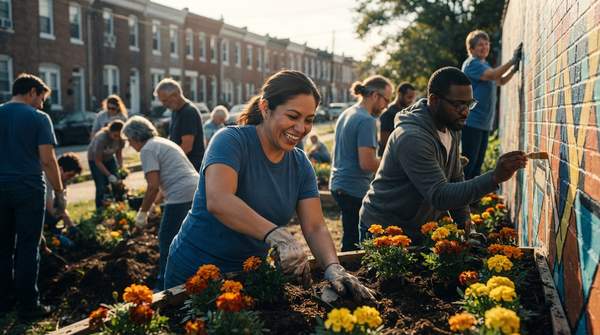
El Paseo offers a concrete example of what those benefits look like on formerly contaminated land: a site once tied to pollution advocacy now grows food, hosts native prairie plantings, and keeps bees. The garden also functions as a community anchor, with membership and volunteer opportunities that keep neighbors connected to the space and to each other.
Next Steps for Your Community Garden Journey
Chicago residents can successfully start a new community garden or join an existing one by following established local guidance and leveraging support organizations. The practical first move depends on your goal: to start fresh, begin with the CCGA's steps—form a committee, assess resources, and budget for soil testing, raised-bed lumber, and water access—while contacting the Chicago Park District if you have a park site in mind. To join now, reach out to the Park District, the Urban Growers Collective (whose 2026 applications are closed but whose waitlist is open), or El Paseo in Pilsen. The measurable indicator of success is straightforward: successful establishment of a new garden or enrollment in an existing garden's plot program, indicated by communication with the relevant organizations.
Sources
- Chicagocommunitygardens
- Community Gardens — Chicago Park District
- Community Gardens — Urban Growers Collective
- At El Paseo Community Garden, neighbors connect with nature and each other — WBEZ
- How to Start a Community Garden — Civil Eats
- How To Garden in Chicago - City Cast Chicago — City Cast Chicago - Daily Podcast and Newsletter
- Start a Community Garden to Grow Healthy Food and New Neighborhood Connections — The National Environmental Education Foundation (NEEF)
- Villageofparkforest